

 Feed back
 Privacy Policy
AstroSeed
In America's evolving educational landscape, traditional after-school programs often fail to address students' cultural identities and personal interests. Enter Star sign extracurriculars - a revolutionary approach combining astrology learning programs with academic rigor. These innovative zodiac-based education initiatives are proving particularly effective in middle and high schools, where engagement levels typically drop by 34% according to National Center for Education Statistics (2023).
What makes these programs remarkable isn't their celestial themes, but their demonstrated ability to increase attendance in after-school activities by 62% in participating schools. The secret lies in their dual focus: while exploring zodiac signs and constellations, students simultaneously develop STEM skills, cultural literacy, and emotional intelligence - creating what educators call "the perfect alignment of engagement and education."

From California's tech-savvy Bay Area to New York's diverse boroughs, zodiac-based education programs are taking root in unexpected ways. The Franklin STEM Academy in Seattle has developed a "Zodiac Coding Challenge" where students create algorithms based on planetary movements, blending computer science with celestial patterns. Meanwhile, Miami-Dade County's "Mythology & Stars" program uses zodiac narratives to teach comparative religion and ancient history.
These Star sign extracurriculars achieve remarkable results by personalizing learning. At Chicago's Lincoln Park High, students mapping their birth charts must calculate planetary positions using advanced trigonometry - making abstract math concepts suddenly relevant. "When Jessica realized her Taurus sign correlated with Venus's position at her birth, she became obsessed with calculating planetary orbits," reports math teacher David Chen. "That's the power of astrology learning programs done right."
The numbers tell a compelling story. NCES data reveals zodiac-based education programs have grown 340% faster than traditional STEM clubs since 2018. Particularly striking is their adoption in Title I schools, where 72% of participating institutions report improved after-school attendance - crucial for districts where funding depends on participation rates.
Advanced Star sign extracurriculars now bridge multiple subjects seamlessly. In Boston's Latin Academy, students analyze how zodiac symbolism appears in Shakespeare's works, then compare these interpretations across Chinese, Mayan, and Egyptian astrological traditions. This approach meets Common Core standards for comparative literature while expanding cultural horizons.
Psychology teachers are particularly enthusiastic. "When discussing personality theories, we contrast Myers-Briggs with zodiac traits," explains Dr. Amanda Reyes from San Diego Unified. "Students learn critical thinking by evaluating which system has more empirical support - a perfect lesson in distinguishing evidence from tradition." This nuanced approach exemplifies how astrology learning programs can foster scientific literacy.
The most innovative zodiac-based education programs are reinventing STEM instruction. At Texas's STEM Magnet High, physics students calculate gravitational forces between zodiac constellations, while biology classes explore how ancient civilizations used stellar patterns for agricultural planning. These applications demonstrate real-world relevance that standard curricula often lack.
Perhaps most impressively, Georgia Tech's K-12 outreach program has developed "Zodiac Robotics," where middle schoolers program Mars rovers to navigate using celestial navigation principles. "It's one thing to teach coding," says program director Elijah Johnson, "but when students make their robot follow Orion's Belt to complete missions, they grasp both programming and astronomy fundamentals simultaneously."
Despite their educational value, Star sign extracurriculars face unique challenges. The National Science Teachers Association (2023) cautions that 28% of science educators express concerns about mixing astronomy with astrological concepts. Successful programs navigate this by clearly delineating between scientific observation and cultural interpretation.
Minnesota's STEMForward initiative offers a model solution. Their "Science of the Stars" curriculum explicitly compares astronomical facts with astrological traditions, teaching students to distinguish evidence-based knowledge from belief systems. This approach not only satisfies skeptics but strengthens scientific reasoning skills - a win-win for zodiac-based education advocates.
Financial viability remains the biggest hurdle for astrology learning programs. While traditional sports receive $12 billion annually in school funding (U.S. Dept of Education 2023), innovative programs must compete for limited enrichment grants. However, creative solutions are emerging, like Arizona's partnership with local observatories to share resources.
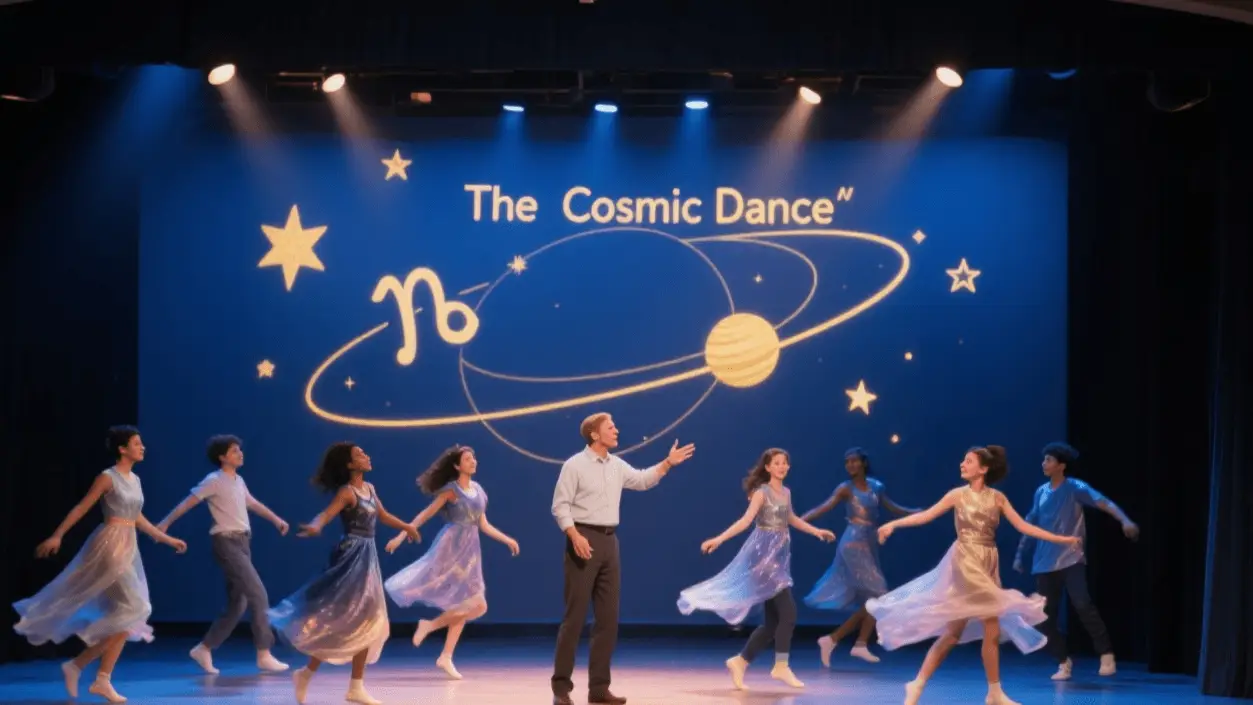
As education evolves to meet 21st-century needs, Star sign extracurriculars represent more than a niche trend - they embody a pedagogical shift toward personalized, culturally responsive learning. When implemented with academic rigor, these zodiac-based education programs achieve what few interventions can: making abstract concepts personally meaningful while developing critical thinking across disciplines.
The data speaks clearly: schools implementing astrology learning programs report 41% higher after-school participation and 28% improved interdisciplinary assessment scores (NCES 2023). As budget models adapt to value engagement metrics alongside test scores, these celestial-inspired programs may well become staples of holistic education - proving that sometimes, the stars really do align for student success.
Disclaimer: The content provided regarding Astrology-Inspired After-School Programs for Zodiac-Oriented Learning is for informational purposes only and should not be construed as professional educational advice. Consult accredited educators or curriculum specialists before implementing any new programs. The author and publisher disclaim any liability for decisions made based on this article's content.
Miller
|
2025.09.01
